Tuesday, April 04, 2006

GUIDE MANUAL -International Internship on Human Rights

This guide manual is an evolving document for The May 18 Memorial Foundation’s international interns on human rights. It is evolving since change is constant and development is inevitable in any organization and undertaking. This guide manual aims to serve as a source of information, guide and companion for interns.
This year, The May 18 Memorial Foundation had re-engineered its present structure. It has reorganized into 5 teams, namely: General Affairs, Educational Programme, Events and PR, Research and Documentation and International Cooperation. The foundation is coming up with new systems and policies to address its growing workforce.
International Internship Programme was introduced only in 2005, it is relatively new. Lessons from the previous experience were noted and effort was made to capture them into this Guide Manual.


1. Introduction to the May 18 Memorial Foundation

The May 18 Memorial Foundation is a non-profit organization established on August 30, 1994. It was organized by surviving victims of the 1980 Gwangju Democratic Uprising, the victims' families, and the citizens of Gwangju. The Foundation aims to commemorate and continue the spirit of struggle and solidarity of the May 18 Uprising, contribute to the peaceful reunification of Korea, and work towards peace and human rights throughout the world. Since its establishment, the Foundation has carried out numerous projects in varying fields, including organizing memorial events, establishing scholarships, fostering research, disseminating public information, publishing relevant materials, dispensing charity and welfare benefits, building international solidarity, and awarding the Gwangju Prize for Human Rights.

The Foundation gets funding from Gwangju citizens, sympathetic overseas Koreans, and from individuals who made sacrifice in the uprising and got indemnification from the government. It is being sustained by people who believe it's important to keep the ideas and memories of the 1980 May 18 Gwangju Democratic Uprising alive and remembered.

2. The International Internship Programme

The International Internship Programme will strive to contribute to the development of democracy and human rights throughout Asia by recruiting four interns from all over the world, who have been working for human rights and peace organizations in their own countries, and by giving them a chance to learn about and experience the history and process of the development of human rights and democracy in South Korea. Specifically the purpose and aim of the program are the following:

a. To improve International Solidarity
b. To promote Gwangju as Asia’s Hub for Human Rights Movement


3. Activities of the International Internship Programme 2006

The International Internship Program will introduce the interns to Korean history in general and in particular to the movements and struggle for democracy, including the 1980 Gwangju Democratic Uprising. Both theoretical learning and practical experiences such as lectures, seminars, discussions, interviews and fieldtrips to the sites of democratization movements in Korea will be utilized.

The International Internship Programme will also require its interns to submit reports concerning the human rights situation in their home countries, as well as on the interns own experiences and work. These reports will be included in the "Reports on Human Rights of the Year" as a part of the rapidly expanding database for use by various human rights organizations inside and outside the Republic of Korea.

The interns will be assigned to the International Cooperation Team. They are expected to work as regular staff attending to day-to-day office business. The interns will help the preparatory work and implementation of different events; make presentations to schools when invited; and perform other tasks the Department will assign them to undertake.

Each intern will be asked to select a research topic, conduct the relevant research, and deliver a presentation at the end of their internship program.


4. Official Duties and Responsibilities


  • a) Interns are the representative of the organization. It is expected that interns will abide by the rules and policy of the organization.
  • b) Weekly Report and Meeting. Interns are required to submit their a weekly report of accomplishment and plan to be shared at the regular staff meeting held every Monday. (This may change since the number of staff had expanded). Refer to Appendix A.
  • c) Business Plan and Report. Interns who go on an official business should fill-out the business plan form. The business report form should be accomplished after the official business had been conducted. Refer to Appendix B.
  • d) Officers and Staff. It is a common practice for new staff to be introduced to the rest of the officers and staff. The foundation will provide interns with a business card they should have it exchanged with other staff when they are introduced.
  • e) Work at 518. Although interns will not be using time card they are required to report to the office from 9:00 AM – 6PM, Monday to Friday (unless there would be schedules that falls on a weekend). The foundation does not employ janitors so staff must report 10 minutes earlier to help other staff prepare or clean the office. Lunch break will be 12:00 noon to 1:00 PM.
  • f) Invitation to give talk. Interns will get invitation to give talk or presentation about their country's history, culture, tradition, as well as issue on human rights, peace and democracy by schools and other groups or institutions.
  • g)Allowance. The Foundation will support each interns with an allowance of 600,000 won (approximately US$ 600) per month.
  • h)Termination of Internship. The Foundation has the prerogative to terminate an intern with due process. An erring intern who does not comply with this guide manual and the terms and policies set forth by the Foundation and its officials; commit insubordination will be terminated from the internship program accordingly.

5. Pre departure

  • a)Before you leave be sure that you have prepared yourself psychologically, spiritually, emotionally, and all other needed preparations for your stay here in Korea.
  • b)Learn some basic Korean words that will be handy when you talk or ask people about things. Politeness should always observe.
  • c)Passport and Visa. Make sure that your passport is valid for at least 2 years. The foundation will help facilitate for you to get a 10-month Korean visa. The May 18 Memorial Foundation will contact the Korean consulates or embassies near the intern’s residence area in his/her home country. When applying for visa, attach the official document of invitation from the Foundation in your application form. Your have to pay for the processing of your own visa.
  • d)Air ticket. The May 18 Memorial Foundation will cover the costs of economy class round trip air ticket of interns (except those from the west).
  • e)Try to secure winter or warm clothes if it is cheaper to purchase in your country. Remember that Seoul (or Korea for that matter) is the 5th costliest city to live. There will be some hand me down clothes from the interns and the foundation for you.
  • f)Departure Checklist :

  • - Passport and Korean Visa
  • - Air-ticket
  • - Travel and Health Insurance
  • - A certain amount of cash in either South Korean won or US dollars for your travel to Gwangju
  • - Clothing appropriate to the four seasons and a business suit.
  • - Reports on activities of the interns' organization (A4. 3~5 pages)
  • - Reports on your country's human rights conditions and your involvements

6. Arrival in Korea

a) Incheon International Airport -Passport and Immigration Control. To receive official permission to enter the Republic of Korea you will need the following documents: (Do not forget to carry all these documents in your hand luggage!)

  • - Your valid international passport, containing your visa (if applicable)
  • - Your Gwangju International Internship Programme invitation letter
  • - Evidence that you intend to leave the Republic of Korea at the end of the program (normally your round air-ticket will suffice)

If you did not obtain your visa before your departure from your home country, the immigration officer at the airport may refuse your entry.

b) Customs. After passing through immigration, you will collect your luggage from the Baggage Claim area and proceed to the Customs area. If you have goods to declare, fill out a Customs Declaration form; if you have no goods to declare, you must still go through Customs and notify the Customs officer that you have nothing to declare.
c) Money Exchange. If you don’t have Korean won have your money changed in any of the money
exchange counter at the airport. Be sure to have at least 50,000.00 won exchanged to pay for your bus ticket and meal on the way. Have some coins as well to make a call to us before leaving the airport.
d) Make a call. Before you leave Incheon International Airport for Gwangju, please telephone and inform the May 18 Memorial Foundation of your arrival time and destination in Gwangju. Refer to above contact numbers. Volunteers from the Foundation will be on hand to welcome you at the bus station and escort you to your accommodations.


7) Journey to Gwangju

Different modes of transportation are available from Incheon International Airport to Gwangju, in Jeollanam-do Province. The express bus from Incheon International Airport to Gwangju Bus Terminal is highly recommended for your convenience. Please be advised there is another city in Korea also named Gwangju. Make sure you are going to the one in Jeollanam-do Province.

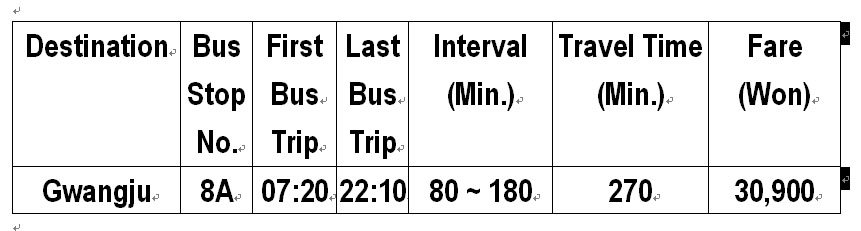
Bus Trip. Buses run directly from the Incheon International airport to the city of Gwangju. In the case that you take a bus to Gwangju from Incheon International Airport, you will need to have on hand approximately 35,000 Korean won (about US$35). The bus trip to Gwangju takes approximately four-and-a-half hours.

* For more detailed information on the arrival procedure, please refer to Incheon International Airport website:
http://www.airport.or.kr/eng/airport/


You can get information on buses to Gwangju and purchase the bus ticket at the Transportation Information Counter on the arrival floor of the airport passenger terminal. After buying your ticket, proceed to Bus Stop No.8A for the bus to Gwangju. The map of the arrival floor of Incheon International Airport and the bus schedule from Incheon Airport to Gwangju Bus Terminal are below:


Domestic Flight. If you would like to fly to Gwangju, you must go to the nearby domestic airport Gimpo Airport. You can buy a bus ticket to the domestic airport at the Transportation Information Counter. It takes about 40 minutes to get to Gimpo Airport from Incheon International Airport by bus. The schedule for the bus to Gimpo Airport from Incheon International Airport is as follows:

8. Life in Gwangju

a) Dining, drinking, and singing culture. Koreans love to eat. The cityscape is peppered with restaurants, convenience stores, street vendors, etc. They normally drink alcohol when they eat their meals. After meals don’t be surprised to be invited to another bar or norae bang (Singing Room) for another round of drinking or singing and drinking.

b) Korean Class. Learning Korean language will be an advantage in your stay in Korea since English is not widely spoken. The foundation will provide a Korean teacher. The interns will be asked to share a minimum amount so as to encourage them to learn the language. The rest of the fees will be on the account of the Foundation.
Holidays. Korea celebrates different holidays like the Chuseok and Seollal. Some staff would invite interns to celebrate with them these events. Also, the office conducts its summer outing and other get together.

c) Accommodation Facilities. Two (2) female and two (2) male interns will separately share a single large room equipped with simple furnishings. The flat has a kitchen and a shower and toilet. The Korean electrical supply works on 220 volts, so if you bring any electrical equipment make sure it functions on this voltage range, or else bring a transformer.

Fees for flat rent, water, electricity and monthly telephone (cable TV/internet) subscription will be charged to the account of the foundation. Long distance or overseas calls will be charged to the account of interns. Use of phone card is advisable.


9. Weekend Activities

Gwangju, a bustling city of 1.4 million inhabitants, nestled at the foot of Mudeung Mountain (1,187m), boasts a number of interesting local attractions. Mudeung Mountain, which is usually snow-covered in winter, can be easily reached by public bus. It has hiking paths, cozy restaurants, and small temples dotting its slopes.

Near the city is a cultural park, home to the Gwangju National Museum with priceless historical and archaeological relics and the Gwangju City Folk Museum, which is the third largest city museum in Korea and is an excellent window into various aspects of Korean culture such as traditional Korean cuisine, time-honored Korean customs, folk games, and shamanistic rituals.

For those interested in art, the Gwangju Culture and Art Center, the Gwangju City Art Gallery and the inner-city's "Art Street" can be visited. On Saturday mornings, a small antique market is held in the "Art Street" area.
With short bus trips, the Korean coast, several nearby islands and number of other cities can be reached in day trips from Gwangju. Korea has a very efficient and cost-effective bus transport system and the Gwangju Bus Terminal is a regional hub for the southwestern part of the country.


10. General Information

a) Weather

Korea has four distinct seasons and it is normally very cold and snowy in winter, from December to February. It is advised that interns bring warm clothing for their stay in Korea, as well as hiking shoes for field trips. During summer it is both warm and wet, there will be occasional rain showers.

b) Internet and Communication Facilities

Out of the work, one can easily find internet cafes, called "PC Bangs" in the streets of Gwangju City. Charges for computer use range from 500 to 1,000 won (0.45 ~ 0.90 US dollar) per hour. Use of telephone card is advisable both for home and public phone calls for overseas calls.

c) Using Public Transportation

Public buses run frequently in major routes of the city. Fare usually starts at 900 won that is paid upon entry at the front door of the bus. Use only exact amount since driver will not have change for bills over 1,000 won. The base taxi fare is 1,500 won.

d) Social Communities

The GIC. GIC was established by the Gwangju City Government and Gwangju Citizens Solidarity in 1999 as a model of governmental and NGO collaboration. Its mission is to provide foreigners with information and services, promoting an international exchange in the fields of culture and economy and fostering international awareness among Korean youth through active involvement in helping the international community of Gwangju and Jeolla-namdo. GIC’s services include public talks, Korean language and calligraphy classes, offers guided tours and publishes a monthly magazine among others. There are church groups, government officials and student English groups or clubs, etc.

e) Recreation and other Facilities

518 Memorial Park. The park is hilly with plenty of trees and ground to do picnic. It is an ideal place to stroll and jog. There’s a Pagoda on top of it that is a good place to view the cityscape. Located within the 518 Memorial Park is the Student Center with facilities such as restaurant, study area, swimming pool, basketball court, table tennis, badminton, ballroom dancing, etc. The center also offers lessons and courses on arts and sports.

Restaurants. Eating places could be found everywhere in Gwnagju City, be sure to speak in Korean if you want to order food otherwise dine with someone who could speak the language.

Cinemas. Movie houses could be found in Sangmudong area and downtown.

Saunas. Saunas have become a theme park for Korean families. After a good/nice bath families or couples would join together in common areas where different Sauna facilities and amenities could be enjoyed such as restaurant/snack bars, singing rooms, video rooms, PC rooms, sauna hot-cold rooms, etc.

Tourist Information Center. Refer to information kiosks widely available in strategic locations to get maps and information about parks, museums and other significant landmarks both in Gwangju City and other parts of Korea.


11. Miscellaneous Information : What was it like to be an intern

Frankly, before I came here, I almost knew nothing about Korea, especially on Gwangju Uprising. All I knew about Korea is that it has a strong labour movement, as it was frequently published in the media in my country, Indonesia.

Being an intern here in the May 18 Memorial Foundation gave me a lot of opportunities of learning about the democratization process in Korea. Since I worked for a victim-based organisation, what attracted my attention the most is the victim's movements here in Korea as it will be an important lesson to be shared with Indonesian victim's community.

Through this internship I was also able to interact with some people or groups working on some other issues beside those 'victims things', such as: labour, urban poor, housing rights, women, migrant worker, environment, lawyer, academe, youth, etc. They were not necessarily Korean people, but members of the international community as well, especially Asian. Those interactions had equipped me with such fruitful knowledge and network.

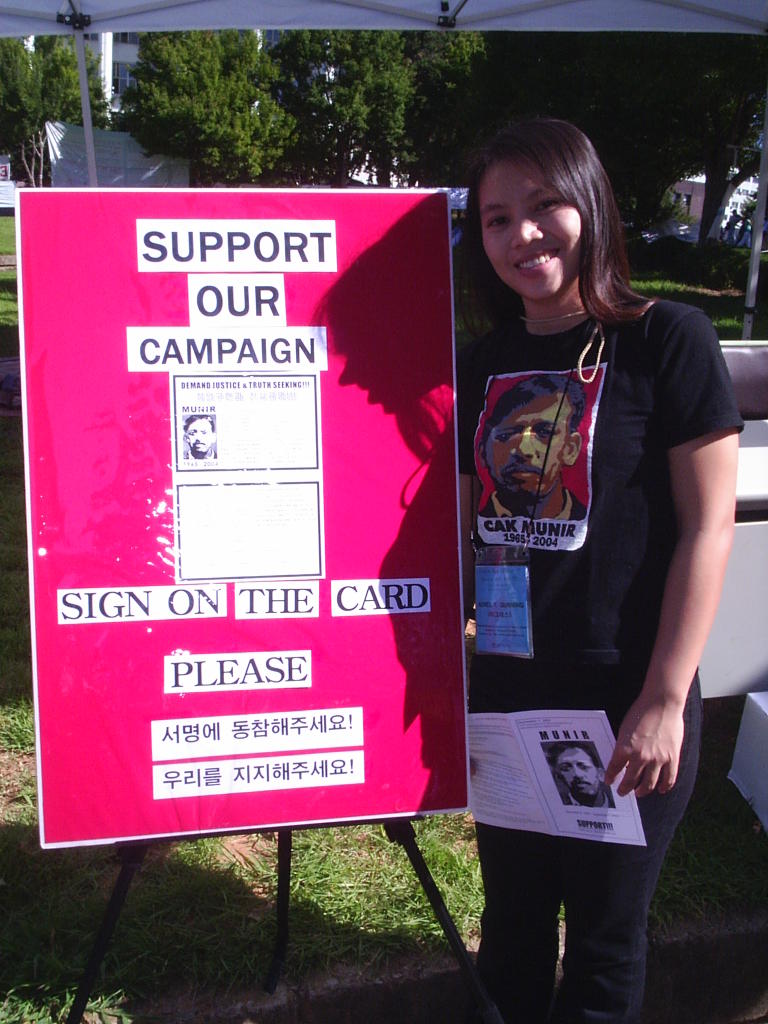
Besides the learning from my Korean experiences, I also had an opportunity to share Indonesia’s current issues. Like once, with the support from my co-interns and the staff of the foundation, we conducted a signature campaign to commemorate the 1st death anniversary of Munir, an Indonesian human rights activist who was murdered on September 8, 2004. We were able to gather about 800 signatures from the citizens of Gwangju City. The collected signatures were sent to Indonesia as a show of solidarity of Korean people for the Munir case.

Living here for some period of time has also led me to experience Korea’s cultural traditions that are new and sometimes quite strange for me. The language, the food, song, values, manners or attitude, work ethics, etc. were all invaluable parts of my total experience of Korea! Mixture of fun, happiness, sadness, excitement, disappointment, anger, and all of other kinds of feelings and emotions have collided inside of me. But I think it's just common and natural. Above all, this internship has a special meaning for me personally :).

One thing that has impressed me is that the people here have a quite high respect for the sacrifices of the people in the past. I think this custom has influenced the process of reaffirming justice especially in case of dealing with the past human rights violation. And it has strengthened Korea as a nation.
Agnes Gurning (IKOHI, Indonesia)

I had a hard time for the first three months of my internship. Coming from an NGO culture, I found the culture of the foundation quite strange. Since we were pioneers we spent sometime trying to figure things out. For most pioneers a new endeavor is like trial and error. So I suggests in order to make the gap of expectations smaller of both interns and the Foundation the aim and the out put of the programme activities should be made clear for all concerned.

Also, at first, most of my expectations of the internship did not match with the real programme of the internship. The tasks I helped implemented such as Gwangju Asian Human Rights Folk School, Gwangju Forum for Asian Human Rights, Gwangju Prize for Human Rights Award 2006; and the different activities such as NGO visits and attending seminars or symposium made the internship more meaningful. Also, I became a speaker in Gwangju Human Rights Film Festival and responsible for inviting Indonesia’s famous rock band called Slank Band for the "Echo of Asia", a peace concert. The most important achievement I got from this programme that enhanced my personal achievements as well was the campaign on Indonesia and Aceh's human rights abuses specifically the campaign on the Case of Munir. Since the foundation holds several events and invites participants from other countries, I believe that The May 18 Memorial Foundation is the right organization to help and support Asian countries with their campaigns.
Mustawalad (KontraS, Indonesia)

My internship was a very unique and worthwhile experience. I always believed that traveling and living in a foreign country broadens one’s horizon, so that makes me want to travel some more. Having Koreans NGO partners and friends in the Philippines made me acquainted with things Korean, in a way made it easy for me to adjust in my stay here in Gwangju City. Although, I am so envious of the success of democracy that the May 18 Gwangju Democratic Uprising gave birth to, paving the way for an economic miracle here in Korea, that envy is fueling my zeal and enthusiasm to continue with my NGO work in the Philippines. Definitely there will be a time for us Filipinos to turn-around our current state of just a banana and labor exporter to Korea. I look forward for that time to come in my lifetime.

I particularly liked the trust I was afforded to do as an intern. Also, the unity and cooperation among us interns was great. Despite cultural and religious differences we were able to transcend them and we could say that we became more than colleagues but real friends if not brothers and sisters. I hope that I have contributed to the aim and objective of the internship program and optimistic that the little accomplishment I and my co-interns have done would be the basis for the next batch to improve on and make greater contributions for the continued success of the internship program. I wish the next batch of interns to take maximum benefit both in their professional career and personal growth in this internship program.
Pete Rahon (CO Multiversity, Philippines)


12. Contact Persons:

Should there be any problems or changes with your planned trip to Gwangju, please contact the May 18 Memorial Foundation through


Mr. Chanho Kim
Director, International Cooperation Team
Mobile: +82 10 4642 6650 (international)
010 4642 6650 (local)
E: surnadal@hanmail.net

Mr. Sang Seon Kim (Chris)
Staff charged for International Solidarity
Mobile: +82 10 8000 8052 (international)
010 8000 8052 (local)
E-mail : chriskim109@gmail.com


Address:
The May 18 Memorial Foundation
5.18 Memorial Culture Hall
Seo-Gu Sangmudong 1268
Gwangju City
Post Code 502-260
Republic of Korea
Phone: +82 62 456 0518
Fax. +82 62 456 0519
W: www.518.org
B: 518interns.blogspot.com

Thursday, March 16, 2006

Red Festa Video and Pix Gallery


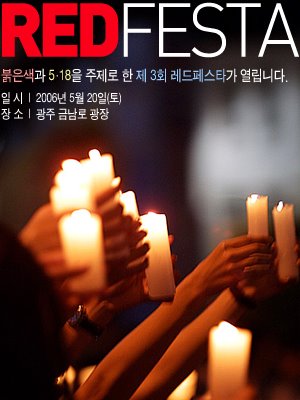
This is the internet ad for Red Festa 2006. Click the link below to watch the pix gallery of Red Festa 2005 (http://www.518red.net/html/photoContent.asp?seq=682 click the leftmost button 이전글 in Korean to scroll).


Click to watch video or cut and paste: http://www.518.org/file/mv/red.wmv

This video is a documentary of Red Festa 2005 commemorating and celebrating the heroic deeds of the people of Gwangju in the May 18, 1980 Gwangju Democratic Uprising. The language is in Korean.


Visit: http://www.518red.net (sorry but available in Korean language only)

Wednesday, March 15, 2006

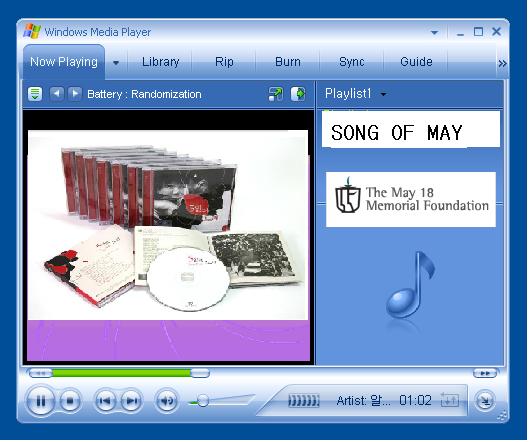
Song of May: Nostalgia and Euphoria of May 1980


Click to listen to Song of May, the music is in Korean. These are songs about the May 18 Gwangju Democratic Uprising.


Song of May: Nostalgia and Euphoria of May 1980

After the incident of May 1980, we have crossed a bridge where we cannot go back. So many people were massacred by the militarists that disguised themselves with democracy and justice, and there is no one who won’t feel guilty in front of those corpses. In an era where we had to fight in order to survive, our agitation had no choice but the revolution for a fundamental transformation defying any romantic feelings.

Going beyond grief, so many songs came out that became weapons for the struggle and overcame the darkness of that era. Also, with the effort of those who lived passionately with music, we now enjoy music as music itself. After 26 years, we produced this album to commemorate the May 18 Gwangju Democratic Uprising in order to remember and immortalize that fateful incident.

If it weren’t for those songs of gruesome deaths and the steadfast for hope, we might not have the sense of pride talking bout May 18 like we do now. Knowing the values of those songs that were alive from that era, we wanted to include all of them to this new album. However, we only selected 13 songs for realistic reasons. These are songs that contain the grief and rage of May 18. Reminiscent songs that have been written after the event are also included making this a great collection music album. We made effort to have it as a representative of various genres for your listening pleasure. For musicians who remember May 18, it is certainly necessary for us to make this album delivers not only a clear message but also to make it as high quality music as well.

The first song “Song of May – 3” is a powerful song that interprets the 5.18 as the hope of a huge history. It is quite easy to feel the solid harmony of the drums and piano, performed by the group “Salm, Treut, Sori”. Even if a Magnolia Sheds” boasts its extraordinary lyricism which likens magnolia to sadness of the May 18 incident, sung well by Jin-oh Moon’s delicate vocals. Joo-sun Choo’s song “Gwangju Brook” is a song which shows the lonely sorrow and resentment through a quiet cello, making the listeners dazed by bringing them back to the day May 18, 1980. The “Song of May -2” represents the May 18 incident, and it is re-arranged into a rock version, delivering the rage livelier than ever. Byung-hwee Sohn’s “The Story of May” is a song that throws a gentle wave through an arrangement of a simple guitar and ocarina. It makes us feel a great impression, but as we hear Chi-hwan An and Tae-choon Jung’s passionate voice, it reminds us of the unfinished task of the 5.18. The “Song of May 1”, was arranged in the hymnal-style that appeases to our wound serenely, while “Huckleberry Finn’s” rock version “March For Thou” enthuses us to follow them.

Although the song has the musical language of 2006, it goes beyond and captures the essence of May 18, 26 years after. The late Mr. Nam-ju Kim’s poem recitation “Massacre”, like a hammer pounding, is one of the greatest poems about the 5.18 which still offers a very moving and powerful impression. Ggotdaji’s “Advancing May” is played with actual sounds from the scene, and is just the right song for a requiem. “Oh Gwangju O Moodeungsan” is a hymnal-arranged piece that enables us to embrace a great peal of the 5.18 spirit that has been restored with magnificence. “Mwetbinari” is a Korean traditional style song that has been arranged with a theme of “March for Thou”. With its flowing and intense composition, it adorns the finale of the album excellently.

This album is filled with nostalgia of restoring the scenes at that time and the euphoria of reinterpreting those scenes as viewed today. For musicians who remember it, the 5.18 is a powerful event that made them who they are today, and it will be continually viewed as move towards progress.

This great album that had overcome different challenging situations was finally published through collaborative effort and passions of all those who helped with the work. We would like to thank all the musicians who helped directly and indirectly. Also, we hope that the song collections serve as a medium to keep the ideals and values of 5.18. This is the courtesy we can give to those who gave their own lives in order to defend democracy to the last that we now enjoy.


(Edited from the review: Publishing the 5.18 People’s Uprising Memorial Album of Min-Gaph Se Jeong, a popular music reviewer.)

Thursday, March 09, 2006

ACT NOW! Gwangju Prize for Human Rights Award 2006


The Gwangju Prize for Human Rights was established to celebrate the spirit of May 18 Gwangju Uprising by recognizing both individuals, groups or institutions in Korea and abroad that have contributed in promoting and advancing human rights, democracy and peace in their work. The prize is awarded by the citizens of Gwangju in the spirit of solidarity and gratitude from those whom they have received help in their struggle for democratization. It is hoped that through this award the spirit and message of May 18 will be immortalized in the hearts and mind of humankind.

The Gwangju Prize for Human Rights which is given yearly has the following aims:
1). To enhance the spirit of the May 18 Democratic Uprising by awarding individuals, groups or institutions in Korea and abroad on their contribution to improving human rights and peace throughout the world.
2). To reward individuals, groups and institutions in Korea and/or abroad for promoting the goals of the May 18 Democratic Uprising as a movement toward unification and cooperation.

A prize money amounting to US$ 50,000, a gold medal and a certificate will be awarded to the winner.


Previous Winners of the Gwangju Prize for Human Rights:
2000 (3rd Nov) : Xanana Gusmao (The president of East Timor)
2001 (18th May): Basil Fernando (Executive director of AHRC; Hong Kong)
2002 (18th May): Korean Association of Bereaved Families for Democracy; South Korea
2003 (18th May): Dandeniya Gamage Jayanthi (Monument for the Disappeared; Sri Lanka)
2004 (18th May): Aung San Suu Kyi (National League for Democracy; Burma)
2005 (18th May): Wardah Hafidz (Coordinator, Urban Poor Consortium; Indonesia)


Nomination and Criteria
The candidates eligible for the Gwangju Prize for Human Rights are nominations made by individuals or organizations who were invited to nominate names for consideration. An individual can not nominate himself or herself. These core criteria should be considered:
1). Outstanding person or group that is active in the promotion and advocacy of Peace, Democracy and Human Rights.
2). A person or group that works for the reunification of Korea.


The Gwangju Prize for Human Rights Committee
Gwangju Prize for Human Rights Committee is responsible for the selection of the candidates and the choice of prize winner. The Committee is composed of individuals appointed by the Board of the May 18 Memorial Foundation.

Information about the nominations, whether publicly or privately is confidential. Disclosure is highly restricted.

Timeline and Process
1). January-February
Announcement and nomination forms are sent out. The Committee sends out invitation letters containing forms to persons who will be requested to nominate.
2). 30 March 2006
Deadline for submission of the forms. The Committee assesses the candidates' work and prepares a short list.
3). April
The “shortlist” is reviewed by the committee and advisers will be consulted for their input and knowledge of chosen candidates. The advisers do not directly evaluate nominations nor give explicit recommendations. On April 27, 2006, committee members will choose a winner and the next day public announcement and press conference will be held in Seoul to announce the winner.
4). 18 May 2006
The Gwangju Prize for Human Rights Award Ceremony will be held. The prize winner receives the award.
________________________


Frequently Asked Questions
Gwangju Prize for Human Rights 2006

What is the Gwangju Prize for Human Rights?
The Gwangju Prize for Human Rights was established by The May 18 Memorial Foundation to celebrate the spirit of May 18 Gwangju Uprising. It is awarded as recognition both to individuals and groups or institutions in Korea and abroad that have contributed in promoting and advancing human rights, democracy and peace in their work. The prize is awarded by citizens the Gwangju in the spirit of solidarity and gratitude from those whom they have received help in their struggle for democratization and search for truth. It is hoped that through this award the spirit and message of May 18 will be immortalized in the hearts and mind of humankind.

What are the aims of the Gwangju Prize for Human Rights?
The Gwangju Prize for Human Rights is given yearly and has the following aims: 1) to enhance the spirit of the May 18 Democratic Uprising by awarding individuals, groups or institutions in Korea and abroad on their contribution to improving human rights, democracy, and peace throughout the world. 2) to reward individuals, groups and institutions in Korea and/or abroad for promoting the goals of the May 18 Democratic Uprising as a movement toward unification and cooperation.

How can I nominate someone for the Gwangju Prize for Human Rights?
The candidates eligible for the Gwangju Prize for Human Rights are those nominated by qualified persons or organizations. The nominee must be an outstanding person or group that is active in the promotion and advocacy of Peace, Democracy and Human Rights, and a person or group that works for the reunification of Korea. The nomination form is available online in the English section of www.518.org website.

Is it possible to nominate, myself or my organization and someone for a posthumous Gwangju Prize for Human Rights?
No, it is not possible to nominate yourself or your organization, also, posthumous nomination is not allowed either.

What is the process of nomination?
The nominator should accomplish the requirements found in the nomination form, get two other referees to answer the questionnaire, and submit by post the accomplished forms and the relevant documents to The May 18 Memorial Foundation.

When and where to submit the nomination?
All nominations must be sent by post to The May 18 Memorial Foundation not later than March 30, 2006.
Nominations should be mailed to:
The May 18 Memorial Foundation
c/o Gwangju Prize for Human Rights 2006
518 Memorial Culture Hall
Postcode 502-260
Seo-gu, Sangmudong 1268,
Gwangju City, Republic of Korea

Who will decide the winner for Gwangju Prize for Human Rights?
The Gwangju Prize for Human Rights Committee is responsible for the selection of the candidates and the choice of prize winner. The Committee is composed of individuals appointed by the Board of the May 18 Memorial Foundation. Information about the nominations, whether publicly or privately is confidential. Disclosure is highly restricted.
When will the winner be announced?
The winner will be announced on 28 April 2006 in a press conference that will be held in Seoul.

How many winners have been awarded the prize?
Since 2000, five individuals and 1 organization have been awarded the Gwangju Prize for Human Rights.

What is awarded to the winner?
Prize money amounting to US$ 50,000, a gold medal and a certificate is awarded to a winner.

When and where will the Gwangju Prize for Human Rights ceremonies take place this year?
The Gwangju Prize for Human Rights ceremonies will be held at the Gwangju City Hall, Gwangju City, South Korea on 18 May 2006. Republic of Korea.


For more information please send email to:
surnadal@hanmail.com (Chanho Kim)
mwalad@gmail.com (Mus)
518org@gmail.com
Visit our website: www.518.org

World Cultural Artist Meeting


World Cultural Artist Meeting
Video sent by Mustawalad
This Video was taken during Gwangju forum for Asian Human Rights in Gwangju South Korea.

The video was taken by Mus and uploaded it, I enjoyed dancing with a participant from the Literary Group who had their conference simultaneous with the Forum we held. The event was in line with the ground breaking of the Asian Culture Center in Gwangju City, ROK.

Sunday, March 05, 2006

The May 18 Memorial Foundation


The May 18 Memorial Foundation
Video sent by peterahon
This video is about the May 18 Memorial Foundation, Gwangju City, Republic of Korea. It depicts the May 1980 Gwangju Democratic Uprising. (Note this video is 140 MB in size).

Monday, February 27, 2006

Visit to Minkhayup


Mus and Agnes made an arrangement for a meeting at Minkhayup Human Rights Group. It was Ms. Ji-yeon Han who received us at their office. She was the only person who could communicate in English. Their office is run by a four-woman team.


On the low table where we sat down with her was a Korean-English dictionary.
We asked her several questions and found out the services and activities that they are doing. Basically their main focus is doing work with political prisoners which they call prisoner of conscience, most of them are political and labor leaders, student activists, etc.

They also conduct advocacy against the National Security Law. They have student volunteers who occasionally help them in their work. Among the significant tasks the organization is doing for prisoners is publication of newsletter/magazine for them. They also do letter writing for prisoners.


We were told that in 1985 there were at least more than 1,000 prisoners. Today there are only more than 70 who are accused of violating the National Security Law. For last year there were only 3 new prisoners accused of the same crime. Mostly labor and student leaders.

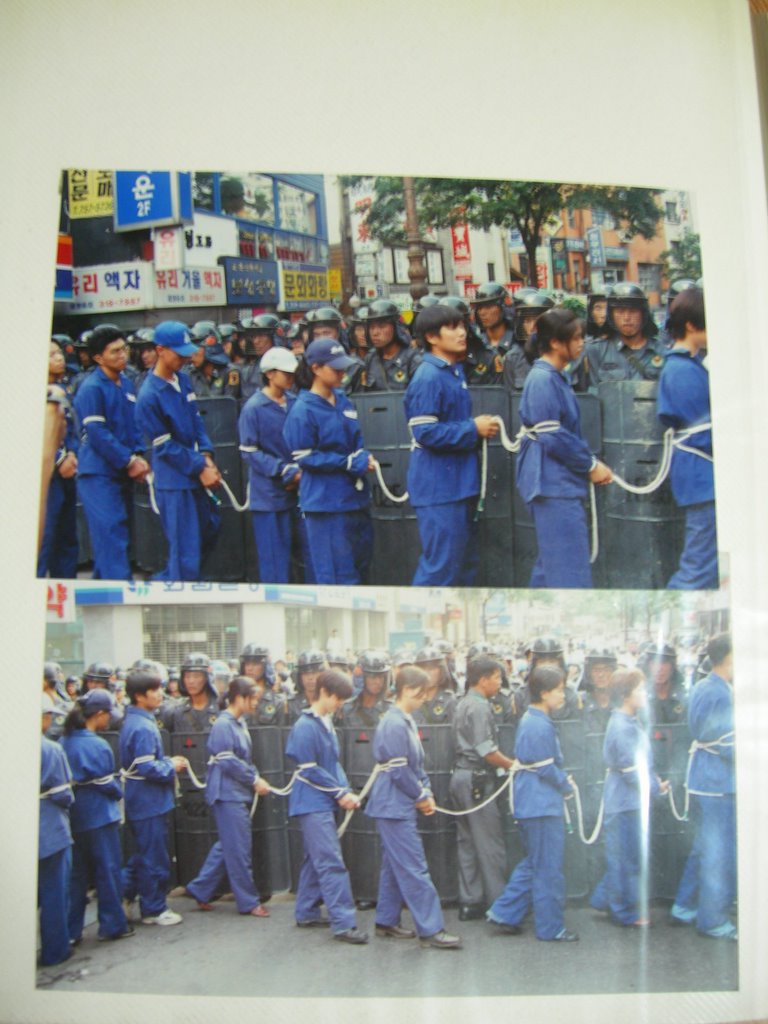
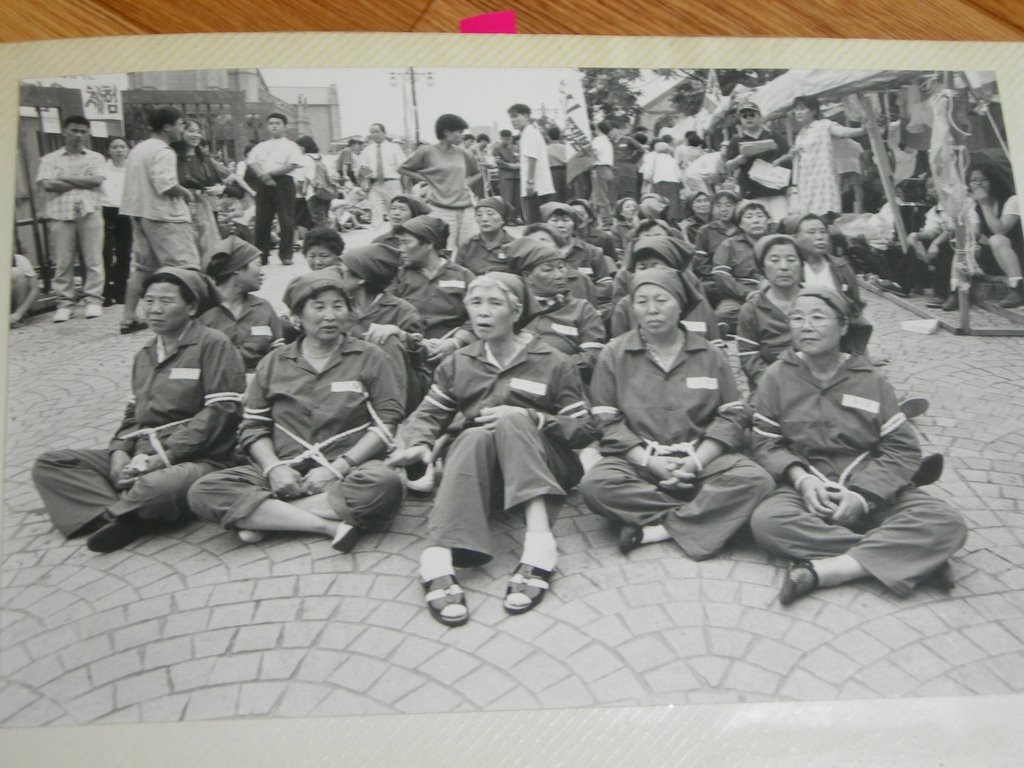
The organization continue to conduct rallies every Thursday to protest on different issues like eviction, human rights, women rights, national security law, etc. The rallies are held in different locations such as Parliament, Universities, Court of Justice etc. Mostly mothers of previous prisoners continue to join the rallies. Students also give their support during their mobilizations.

We took several pictures of the campaign that Minkhayup have done in the past that are shown in this blog entry.


Saturday, February 25, 2006

MATAHARIKUH KEKASIHKUH: Last Dinner Together in The End of 2005

MATAHARIKUH KEKASIHKUH: Last Dinner Together in The End of 2005

I blog this - a button found at Agnes's blog. So it was posted here. Enjoy reading her blog especially if you have facility in understanding Bahasa Indonesia.

Tuesday, February 07, 2006

FAQ on the Gwangju International Internship Program on Human Rights 2006

1. What is the May 18 Memorial Foundation?

The May 18 Memorial Foundation was founded with the funds from Gwangju citizens, sympathetic overseas Koreans, and from individuals who sacrificed and got indemnification from the government. It was created on August 30, 1994 by people who believe it’s important to keep the ideas and memories of the 1980 May 18 Gwangju Democratic Uprising alive and remembered.

2. What is the Gwangju International Internship Program on Human Rights?

The International Internship Program on Human Rights is under the May 18 Memorial Foundation’s General Affairs Department International Solidarity program. The International Internship Program on Human Rights was created to contribute to the development of democracy and human rights throughout Asia. It is also an opportunity for interns to learn and experience the history and process of the development of human rights and democracy in South Korea. Specifically the purpose and aim of the program are the following: 1) To improve International Solidarity and 2) To promote Gwangju as Asia’s Hub for Human Rights Movement.

3. How will it be conducted?

The International Internship Programme will introduce the interns to Korean history in general and in particular to the movements and struggle for democracy, including the 1980 Gwangju Democratic Uprising. Both theoretical learning and practical experiences such as lectures, seminars, discussions, interviews and fieldtrips to the sites of democratization movements in Korea will be utilized.


4. What will be the tasks and assignments of the interns?

The interns will be assigned to the International Solidarity Program of the General Affairs Department of the Foundation. They are expected to work as regular staff attending to day-to-day office business. The interns will help implement preparatory work for different events; make presentations to schools when invited; and perform other tasks the Department will assign them to undertake. Each intern will be asked to select a research topic, conduct the relevant research, and deliver a presentation at the end of their internship program.

5. Who will be recruited for the International Internship Program?

Four interns, two males and females from all over the world will be recruited. They should be NGO workers or activists who have been working on the issues of human rights, democracy and peace in their own countries. They should able to work with others of different nationalities and cultural backgrounds.

6. What are the criteria of recruitment for the International Internship Program?

a. Applicant should not be more than 35 years of age.
b. Have more than 3 years experience of NGO work on the issues of human rights, democracy and peace.
c. Must be proficient in English and working knowledge of Korean is an advantage. Intern must be computer literate.
d. Willing to stay in Korea for at least 10 months (May 2006-February 2007).

7. What are the processes of application?

a. Announcement will be sent by January 2006 and deadline will be on 20 March 2006. The result will be released by April and the internship program will start on the month of May.
b. Applicants should submit a duly filled-out form via email to the May 18 Memorial Foundation.
c. The foundation’s screening committee will assess and evaluate all applicants. And the
y will decide those who will join the International Internship Program.
d) Application form can be downloaded in the English section of 518.org website.

8. Where will be the place or location of internship?

Interns will be based at the office of The May 18 Memorial Foundation located at Seo-gu, Sangmudong, Gwangju City, Republic of Korea.

9. What are the compensation and benefits given to interns?

The May 18 Memorial Foundation will provide an intern 600,000 won or approximately US$ 600 allowance per month. It will cover the costs of their economy class return air tickets. Two female and two male interns will separately share a single large room or flat equipped with a kitchen and shower or toilet facilities. The semi-furnished room will also have a telephone, cable TV and internet access. In addition, interns will be entitled to a health insurance and official paid vacations or holidays.

10. Whom to submit the application?

Duly filled out application form can be submitted by email to the contact below. Please contact us for otherinformation and details :

Mr. Chanho Kim
Director, International Solidarity Program
General Affairs Department
The May 18 Memorial Foundation
5.18 Memorial Culture Hall
Seo-Gu Sangmudong 1268
Gwangju 502-260
Republic of Korea
Phone: +82 62 456 0518
Fax. +82 62 456 0519
Mobile: +82 10 4642 6650
E: surnadal@hanmail.net
W: www.518.org

Pete E. Rahon
Co-coordinator for International Internship Program
(Philippines, CO Multiversity)
E: may18found@gmail.com / may18interns@gmail.com
W: www.518.org
Blog:518interns.blogspot.com / 518folkschool.blogspot.com
Wednesday, February 01, 2006

The May 18 Memorial Foundation Revs up International Solidarity Program


Recognizing the magnitude of globalization and the overarching influence of information and communications technology, international solidarity gets highlighted as response to these global phenomena. International solidarity is one of the core tasks identified by The May 18 Memorial Foundation. It envisions an international solidarity with other countries and organizations based on common goals and mutual interests of promoting the spirit of May 18 Gwangju Democratic Uprising; advocating for human rights; and protecting the gains of peace and democracy.

The International Solidarity Program shall focus on partnership, participation, exchange and networking with civil society groups of Asia and the rest of the world. Particularly it will conduct: 1) regular exchange of experience and expertise with government, human rights institutions, democracy, peace and other civil society groups in Asia; 2) establish a proactive mechanism for collective action and coordination (education, campaign, and programs for social dialogues and action and address equity issues like gender equality and equal participation); 3) conduct activities and hosts forums that introduces international issues and participate in international conferences and gatherings abroad; 4) build bridges of communications among the civil society of Asia and the rest of the globe through the internet and publication of journals, newsletters, brochures and books both in Korean and English; and 5) facilitate the exchange of experiences and technology (expertise, know-how and human resources) that goes beyond simple financial support.

Since 2000, the foundation has been awarding the Gwangju Prize for Human Rights, sending its volunteers abroad for internship, providing support for non-government organizations, conducting the Gwangju International Peace Camps, and introducing Korean Democracy especially to Korean youth born abroad.

In 2005, the foundation added new activities such as the International Internship Program on Human Rights, where human rights activist are invited to learn the history and experience of Korean democratization and help promote International Solidarity; Asian Partners Study Visit and Exchange, committee members and officers of the foundation visit and learn from its partner organizations; and the Gwangju Forum for Asian Human Rights, that endeavors to dialogue and forge solidarity between and among public officials of National Human Rights institutions, human rights activists of Non-government Organizations (NGOs), academe and other civil society groups.

For this year, these activities will be continued, according to General Affairs Director Chanho Kim. He believes that through The May 18 - International Solidarity Program the spirit of May 18 will be promoted and Gwangju's role and contribution to international peace, human rights and democracy will be highlighted. He invites individuals, journalists, civil society groups and organizations to join and support the foundation in commemorating and celebrating these programs and activities. Mr. Kim added that detailed information about these activities can be downloaded from the English section of their website at www.518.org.


Contact:

Chanho, Kim
Director International Solidarity
General Affairs Department
Email: surnadal@hanmail.net, 518org@gmail.com, may18found@gmail.com
Mobile: +82 10 4462 6650
The May 18 Memorial Foundation
5.18 Memorial Culture Hall
Seo-Gu Sangmudong 1268 Gwangju 502-260
Republic of Korea
Phone: +82 62 456 0518 Fax. +82 62 456 0519
Website: www.518.org

Friday, October 28, 2005

Meet our Interns

For the residents of Gwangju and to most Koreans, May 18, 1980 is a sacred day. It was this date that people offered their lives for democracy. The May 18 Memorial Foundation is an expression to commemorate and continue the spirit of struggle and solidarity for peace and human rights throughout the world. Also, it aims for the peaceful reunification of Korea.

Since its establishment in 1994 as a non-profit organization by the surviving victims of the uprising and the rest of Gwangju citizenry, the foundation has carried out numerous projects that include organizing memorial events, establishing scholarships, fostering research, disseminating public information, publishing relevant materials, dispensing charity and welfare benefits, building international solidarity, and awarding the Gwangju Human Rights Prize.

For the first time the foundation is sponsoring an International Internship Program on Human Rights. The goals of the program are: to improve efficiency of International Solidarity Task by recruiting human rights organizations, activists, researchers in Asia, America and Europe and to promote Gwangju as an Asian Human Rights Movement hub. Also, the internship program is seen to contribute to the development of democracy and human rights throughout Asia. Interns will be given a chance to learn about and experience the history and process of the development of human rights and democracy in South Korea. They will be conducting researches and public presentation on topics related to human rights, peace and democracy.

The foundation has five interns from four different countries that include Nepal, China, Indonesia and the Philippines. These interns are NGO workers and human rights activist in their countries and will attend the program for the next 10 months that will culminate in May 2006.


From Nepal our intern is Mr. Ram Prasad Sharma. He is the first among the interns to arrive in Gwangju City last May 2005. He has been working Advocacy Forum, Nepal since 2001 as a Advocate Legal Officer. His main responsibilities are monitoring detention centre and make detainees aware of their legal and human rights. He also documents cases of extra judicial killing, disappearances, abduction and torture from both the state and rebels groups. He also provides legal aid for detainees by filing the habeas corpus case in courts in their favor them. To get to know more about Mr. Sharma please follow link to Q&A with Interns.


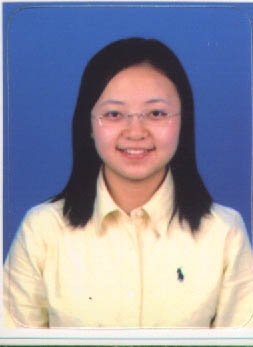
Our Chinese intern is Ms. Xiaolin Pan, a graduate student of International Law at Peking University Law School. She is a member of the university’s Research Center of Human Rights Law School (www.hrol.org). The Research Center publishes periodicals and journals on international treaties, conferences proceedings and other basic information on human rights. The center also offers a Master’s Degree Program on Human Rights and Humanitarian Law in cooperation with the Raoul Wallenberg Institute (RWI) of Lund University of Sweden.


Indonesian representatives are Ms. Agnes Theodora Gurning of IKOHI and Mr. Mustawalad of KontraS. Ms. Gurning is coordinator of their organization’s Data Base Division. IKOHI is a human rights victim- based organization that has three main programs campaigns, members’ empowerment (social, economic, psychological counseling) and data base. Their organization hopes that she will accumulate wealth of experience from the Korean internship programme. She will be in-charge with International Networking on Human Rights when she returns to Indonesia.


Mr. Mustawalad came from Aceh where he work for KontraS as a investigation, data base and research officer. He has been with the organization since 1998 but was transferred to Jakarta in 2003 when martial law was declared in Aceh. Military prevented NGOs like KontraS in doing their job especially monitoring human rights abuses. With the signing of Memorandum of Understanding (MOU) between Free Aceh Movement (GAM), and the Government of Indonesia (GoI) last 15 August 2005, at Helsinki, Finland, he looks forward of walking again freely in his beloved native land. He is interested to learn the Korean experience of sending high profile human rights violators to court, awarding compensation and delivering justice to human rights victims and various campaign strategies that will help facilitate peace process and development in Aceh.


The invitation to Philippines was extended to the Community Organizers Multiversity (CO Multiversity). A non-government organization (NGO) that seeks to enhance the capacities of community organizers, people’s organizations and other development organizations by creating and nurturing innovative, culturally-sensitive and empowering community processes in partnership with other stakeholders. With its enhanced programs, CO Multiversity aims to achieve and carry out its distinct role and mission in empowering among others marginalized communities. CO Multiversity sent last July 8, 2005 Mr. Pedro E. Rahon, a program assistant staff to join the internship program. As an intern he will be doing researches on the plight of Filipino migrant workers in Korea, Filipinas married to Koreans, and the Philippines-Korean lessons and experiences in solidarity and study exchanges.


(Note: this article was made a long time ago and never got posted online so it is posted here)

Sunday, September 25, 2005

Fare- WELL ! Ram


Ram is leaving us, Fare- WELL !

It is really sad to say goodbye, but life has to go on, people moves on, on and on and ….

Tonite,25 September 2005, Ram will go back to Nepal after more than 5 months of stay here in Gwangju City, Repubic of Korea.I made interview of Ram for an online publication but up until now is not yet posted, so I think I have to post if here as a tribute to our friend and co-intern Ram Prasad Sharma.


The interview:

Q & A with a Human Rights Intern
Ram Prasad Sharma
(Advocacy Forum – Nepal)


1- Please tell us about yourself ?

My Name is Ram Prasad Sharma. By profession I am Advocate of Supreme Court [Human Rights Lawyer] of Nepal. I have been working with the Advocacy Forum Nepal as a legal officer since the last 5 years.

2) Tell us about your country?

Nepal is one of the Hindu Kingdoms in the world. It covers an area of 147,181 square kilometers that stretches 145 to 241 km north to south and 850 km west to east. Geographically Nepal is sandwiched between two super power countries, China and India. Kathmandu is the capital. Environmentally it is mountainous in the northern parts. The hills that separates Mahabharat range to Chure hills and Terai is in the south. The world highest peak, Mount Everest is 8,848 meters high in the north; lowest point is 70 meters from the sea level. It is with a mixed biodiversity.

The population of Nepal is 23 million. More than 90 percent of the population is Hindu. And 90 percent of the people depend on agriculture for their livelihood. More than 25 ethnic groups exist and different languages are being spoken but the official language is Nepali. The Lord Buddha was born in Nepal.


3) Tell us about your organization?

Advocacy Forum- Nepal, is a non-profit or non-government organization established to promote and strengthen human rights and rule of law in Nepal. Advocacy forum has following program and activities:

Custody Monitoring Program
It is the main program of Advocacy Forum. The Forum has 5 Regional offices and 1 head office in the capital, Katmandu. Almost 30 police custodies are covered by forum’s regional offices and head office. Every day forum lawyer visits custody to survey the detainee’s basic legal and human rights. Forum lawyers are free to take interview with detainees any time. The Forum also establishes mechanism for lawyers to have access into police custody. The Forum fulfills the need of prisoners for legal services since private lawyers and firms neglect in providing this help. The Forum advocates that detainees must first be visited by lawyer or a legal counsel before they are presented to the court. The accused must know what kinds of charges are filed against him. Every three months the Forum calls for consultation meetings among the Police investigation departments, judges, public prosecutors and private lawyers in order to improve the investigation system of Nepal and the role played by other stakeholders. The Forum shares figures and evidences which they found in custody to public prosecutors offices and the courts. The Forum has been providing legal aid to those people who can’t afford the services of private lawyers. The Forum is strictly opposed to juvenile detainees. The Forum support and provide services to these juvenile delinquents, torture victims and medical services to sick persons inside the prison.

Documentation of Extra Judicial Killings and Disappearances -
Advocacy Forum has been documenting extra judicial killings, disappearances, and abductions, tortures and abuses caused by the state and non state actors during the civil war and various encounters in Nepal. If some parts of Nepal have clashes, encounters or battles, Forum lawyers are sent to conduct investigation. Lawyers meet with victims, victim’s family, eye witnesses, and concerned authorities. The Forum documents what kind of human rights violation cases were made and forward the information to international human rights organization. Questions were raised to security forces through the help of international human rights organizations. The royal army was pressed to form a court of inquiry to mete penalty to those security officer who committed violations and crimes.

The Forum is keeping the record of how may people lost their lives, how many people were injured, abduction and disappearances. It also provides free legal aid to the people. Forum lawyers file cases of habeas corpus in courts to prevent people from illegal detention. Almost 500 habeas corpus cases had been handed by the Forum’s lawyers. The cases continue to increase rapidly.

Juvenile Justice
The Forum has always been providing free legal and medical supports for juvenile detainees. If Forum lawyers found juveniles in the custody of police, they would interfere and invoke child rights and child law of Nepal. Almost 20 juveniles had been sent to child care centres from the police custody with due process of law.
Medical support for victims of torture and cases filed against the perpetrators
The Forum aims to reduce torture and establish a fair trial system in Nepal. When the Forum’s lawyer found any torture victims in police custody and jail they took them to the hospitals to check their physical and mental condition. If the victim was tortured by authorities, then a Forum lawyer file a case against the perpetrators according to the Nepalese compensation act.

Programs for the jail/custody personnel, public prosecutor offices and other authorities
Advocacy Forum has been providing training seminar and workshop for the police authorities (especially those who are involve in investigation), judges, jailors, public prosecutors and private lawyers in improving judicial-criminal system in Nepal. The Forum had established libraries in the police station, detention centers and jails.

4) What do you expect to gain from this internship program?

As an intern I would like to learn about following subjects: democratic movement of Korea and how they achieved it; compensation by the government of those injured, killed and disappeared; labor movement of Korea; democratic movements here in Kwangju City, in Seoul, Busan and other cities; Marshal act during the 1980s; Migrant Labor Laws and the problems of migrant people in Korea (specially SARC countries); interview and dialogue with victims and victims families of democratic movement during the 1980’s; I like to learn about the activities of the National Human Rights Commission (NHRC) of Korea and how it is working for the promotion of Human Rights here in Korea and the kind of international solidarity they do.

5) What can you give in return to the Foundation?

As a human rights lawyer I can give the following in return to the Foundation: I can share the human rights conditions (human rights abuses, etc.), norms and humanitarian laws in my country; documentation of all kind of human rights abuses; share my knowledge about international human rights law and human rights treaties; share the background of civil war in Nepal, its reasons, effects and the violations of human rights and other abuses both from the government and rebel’s side; inform about the problems of disappearances, abductions, extrajudicial killings and tortures in Nepal; and also give background of the democratic movements of Nepal after February 1, 2005 Coup d’ etat by the King.


6- What is the present political climate in your country, its human rights condition and situation?

The present situation of Nepal is marked by gory murders, indiscriminate killings, and disregard of humanitarian values. My country has been in a state of civil war since 1996 when the Communist parties (Maoists) took weapons against the monarchy of Nepal. The violent conflict is the main reason for the widespread violation of human rights and disregards for humanitarian law. There is no rule of law and there’s a political deadlock. Human Rights violation is on the rise. Extra judicial killings in fake encounters have grown rapidly. A number of people have disappeared; almost 2000 disappearance cases had been registered at National Human Rights Commission. Arbitrary arrests and detentions by the security forces are increasing rapidly.

Political leaders, the prime minister, ministers, and former prime ministers were arrested and some of them are detained on a house arrest for over a long period of time. Some still languishes at detention centers. Human rights activists are threatened as well, some have left the country due to security reasons.

After Feb. 1st 2005, media crackdown was instigated by the King. There is no press freedom; independent news is censored by the Nepalese government. Some people from the media and the press were locked by government. Local newspapers and radio are under threat. They don’t have the right to broadcast news that is anti-government.

On the other hand Maoists are putting pressure on human rights activists asking them to register to them. Now government is sponsoring village defense forces to counter Maoists. More than 350 houses at Chanaute Kapilwastu district were vandalized, torched and five innocent people were killed on charge of being Maoists. Simultaneously in Dhading a neighboring district of the Capital Katmandu, the government is forcing young people to join them in retaliation against Maoists.

A lot of people had migrated to other places due to this arm conflict. There is no parliament, the King appoints everyone: ministers, district, zonal and regional authorities. This illegal authority has suspended 140 government employees. No courts orders are being respected thus, weakening the judiciary. Human rights lawyers are threatened and victims are silently terrorized. Victims are not given justice, they can’t even file complaints even after suffering from serious torture since the security forces or the army in particular threatens them and their families.


7) How does your organization addresses these issues and concerns on democracy, peace and human rights?

Advocacy Forum continues to lobby for peace and democracy since it was established. Human rights violation is a serious problem in Nepal. My organization serves as a human rights watch dog. It has been working for the protection and respect of fundamental and human rights of the people. It conducts public awareness campaign, publication, seminars, workshops, field monitoring and consultation meetings to address human rights issues. The Forum advocates both to government and the rebels to respect and uphold human rights and humanitarian law. The forum also helps people to advocate their issues both in the national and international human rights organizations.


8) What are your impressions about Korea?

As an intern I have the chance to learn about Korean democratic movement of 1980s. Those people who actively participated during the 1980s democratic upraising are now well reputed people and considered patriots. The stories of their bravery are even covered in school curriculum. Government and some NGO has been collecting their story to promote it and so people will remember their valor. I admire the Korean peoples struggle for democracy and becoming a well developed economy. I appreciate Korean democracy and how the people are able to exercise their fundamental, human rights and live freely in a democracy.

Friday, September 09, 2005

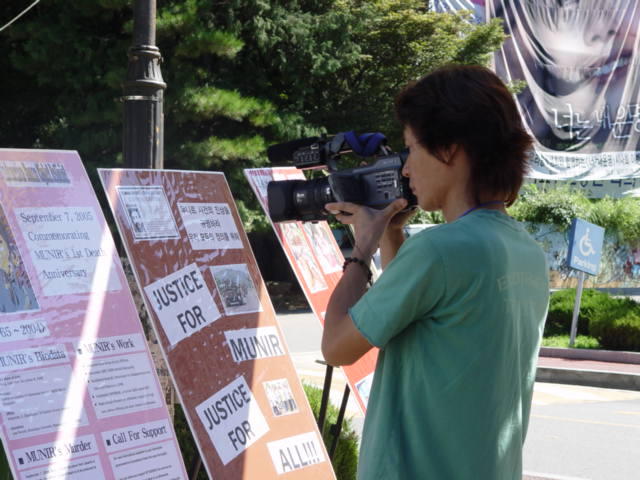
JUSTICE FOR MUNIR! JUSTICE FOR ALL!


Press Statement on MUNIR's 1st Death Anniversary

Today, September 7, 2005 is exactly one year after Munir passed away. He died on a Garuda plane on his way to Netherlands from Jakarta. The official cause of his death was poisoning due to an extreme amount of arsenic found in his body. The death of Munir was politically motivated.
His assassination is a threat to human rights and democracy in Indonesia.

Although the investigation and judicial process on Munir case has been conducted, it is still far from complete. Up until now, the trial has only identified perpetrators but not the masterminds who remain at large. It is important that both direct perpetrators and the masterminds should be punished to give justice to Munir, his family, the Indonesian people and the international human rights community he served.

Therefore, to commemorate Munir’s 1st Death Anniversary, we would like to repeat our call to Indonesian government to act on this case judiciously. The Indonesian government should ensure a fair, impartial and independent trial on the case of Munir. The whole truth should be made known and justice meted out.

This treacherous act of murder to a human rights defender should be resolved at the soonest possible time. Justice delayed is justice denied. The government is seen to manipulate this case through the passage of time and might be shelved and forgotten. But the human rights community in Indonesia and the rest of the world remain vigilant. The crime committed against Munir will never be forgotten. This utter violation of the basic right to life of active human rights defender of Indonesia is despicable. The cycle of impunity going on in Indonesia should be put to an end, once and for all.

Today, we call the support and sympathy of the Korean public to help us strengthen and reinforce the pressure to the Indonesian government to act on Munir’s case. The City of Gwangju is famous for its ideals of democracy and human rights. We believe that the spirit of the May 18 Gwangju Uprising is alive and could be spread out to other places such as Indonesia where violations of human rights is rampant. We hope that it will inspire us in our struggle in achieving our own dream of democracy.

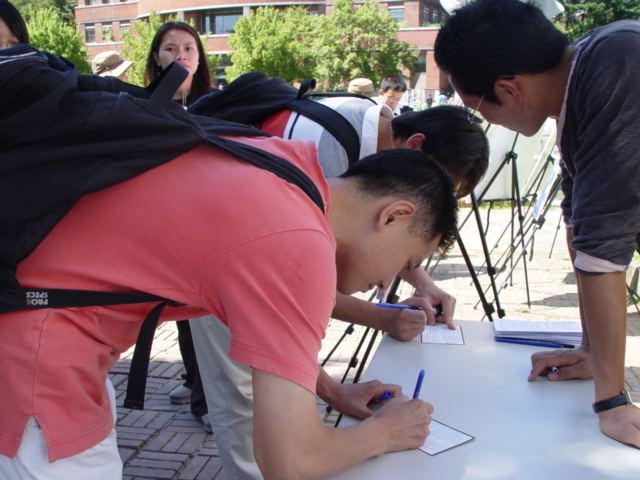
We will be distributing cards to be signed at strategic places in Gwangju City where people usually gather. Please show your support by signing those cards. We will send all of the signed cards to the President of Indonesia, Mr. Bambang Soesilo Yudhoyono to inform him that the Korean people are one with us in the demand to give Justice to Munir!

Justice for Munir! Justice For All!

Gwangju, September 7, 2005

IKOHI – Indonesian Association of Families of the Disappeared, Indonesia
KontraS – Commission for Disappearance and Victims of Violence, Indonesia

SUPPORTED BY :
The May 18 Memorial Foundation, Republic of Korea
COM – Community Organizers Multiversity, Philippines
Advocacy Forum, Nepal
Peking University Human Rights Research Center, China

(press statement made by Agnes Gurning of IKOHI)

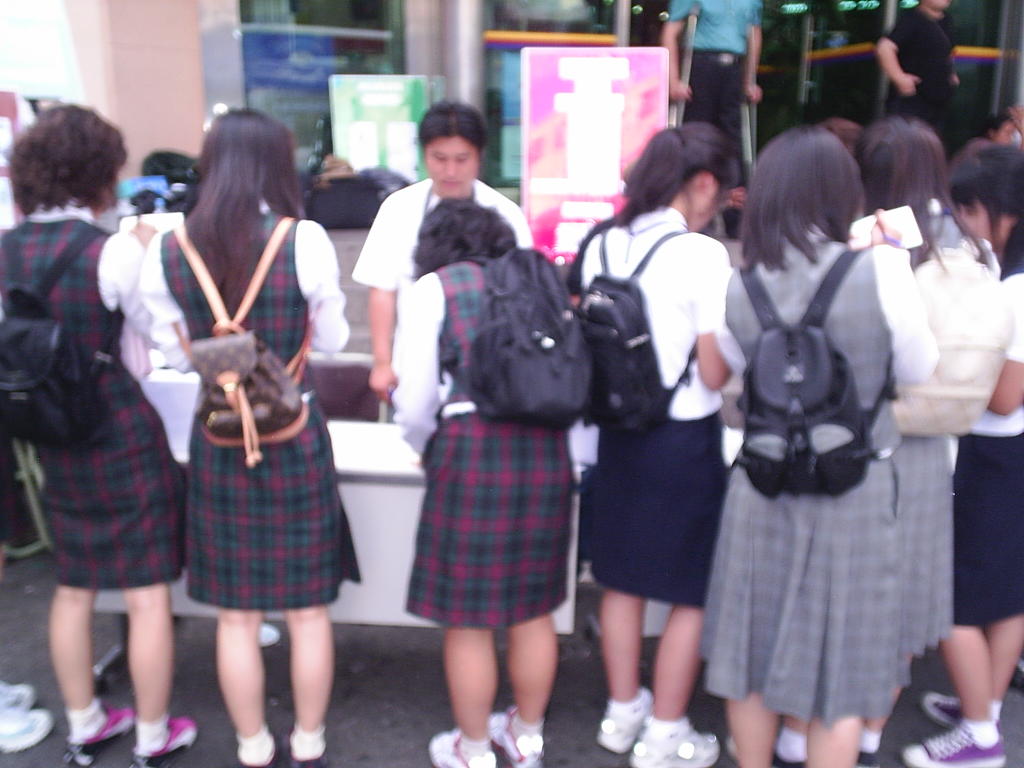
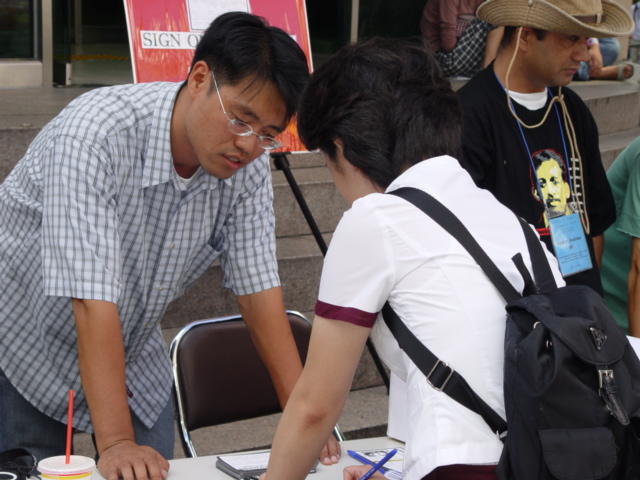
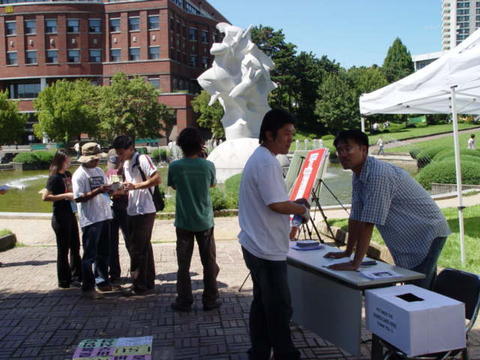
Pictures of the campaign:


Chonam University


Downtown, In front of Post Office (Close to the Provincial Hall)


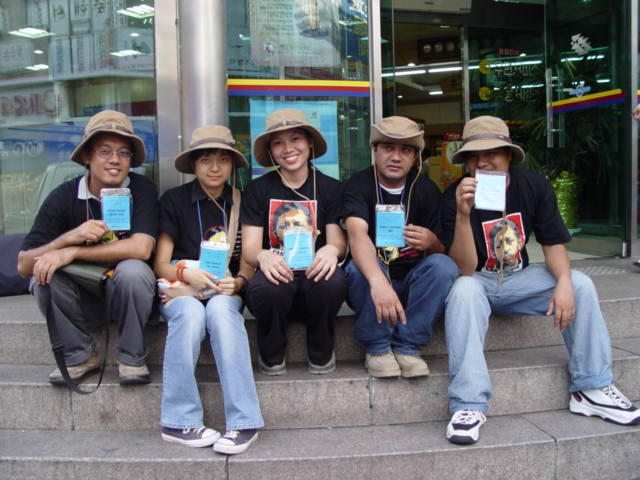
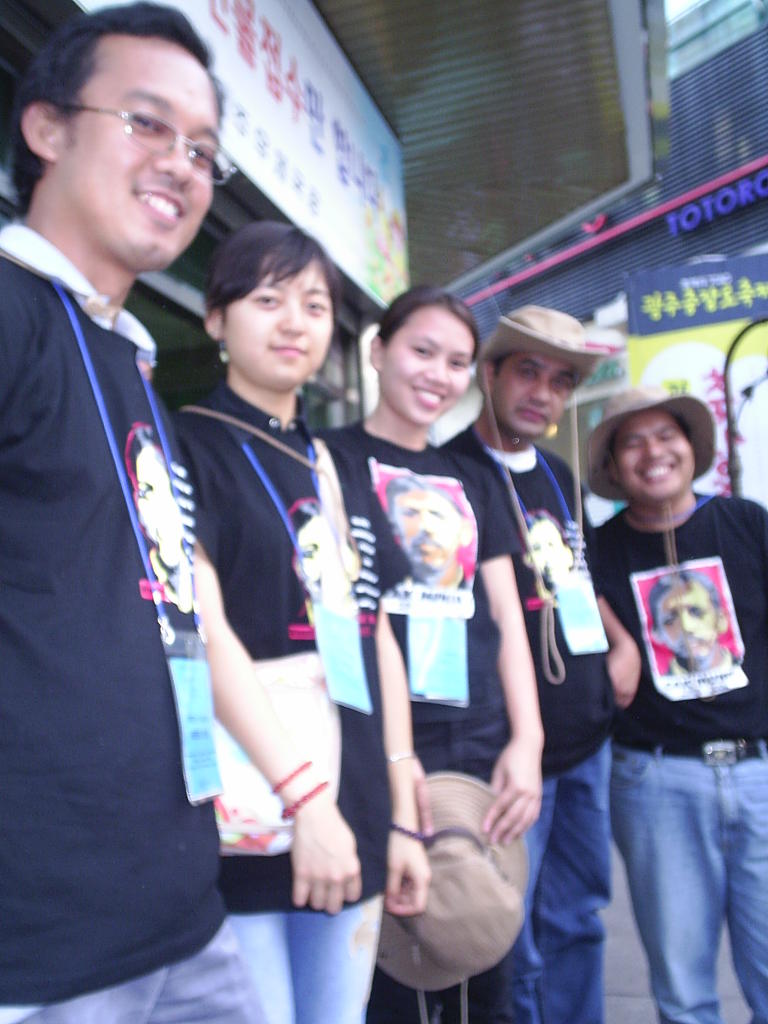
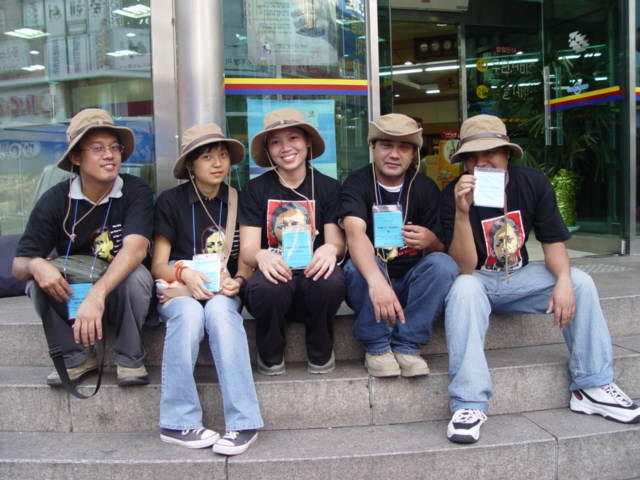
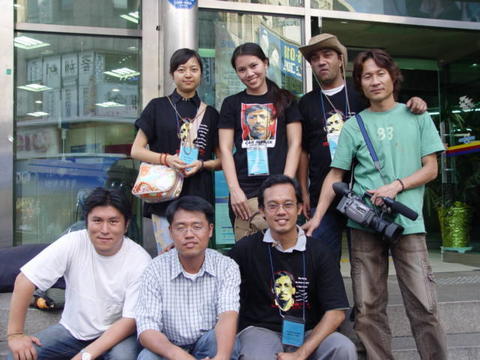
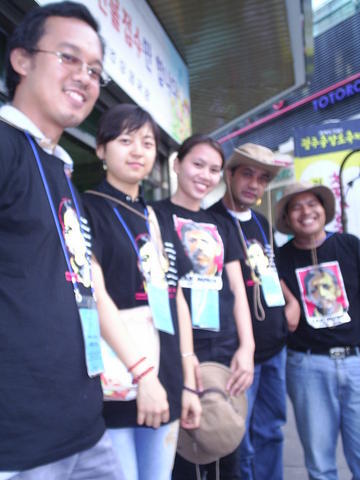
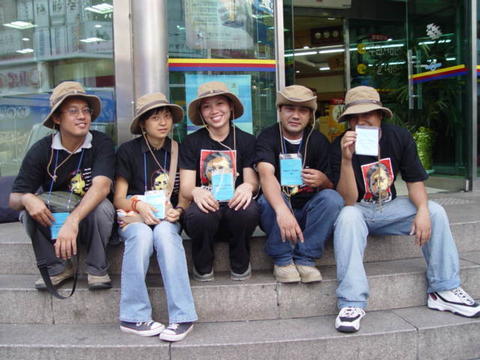
The Magnificient Team all smiles after a hard day's work and they will keep demanding: JUSTICE for MUNIR, JUSTICE for ALL !

Thursday, September 08, 2005

Justice to MUNIR, Justice for ALL !


Commemorating the 1st Death Anniversary of Munir

I. Objective

To make use of Munir’s 1st death anniversary to advocate his case to the Korean public by informing and getting their support through signature campaign. This campaign shall serve as contribution to the growing international pressure to Indonesian government to act judiciously on the assassination of Munir.


2. Forms of Action

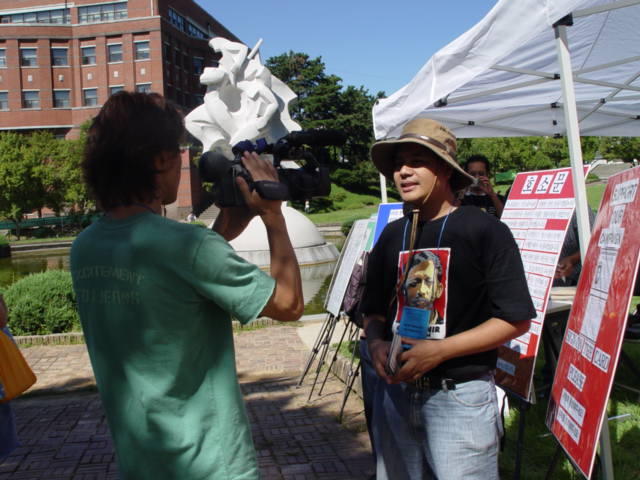
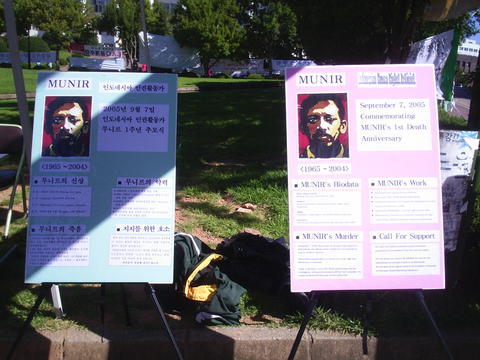
Exhibition using campaign materials such as : Munir’s profile, pictures of human rights situation in Indonesia, and news articles on Munir case.


Spread and distribute leaflets on Munir case.

Gather signature by signing cards of support on Munir case addressed to the Indonesian President Soesilo Bambang Yudhoyono.


3. Description of Situation

At Chonnam University

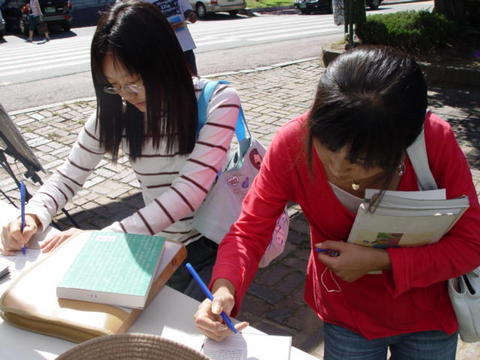
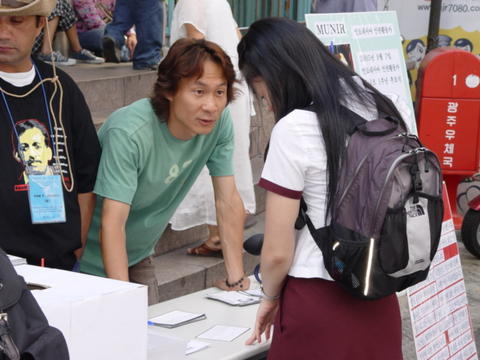
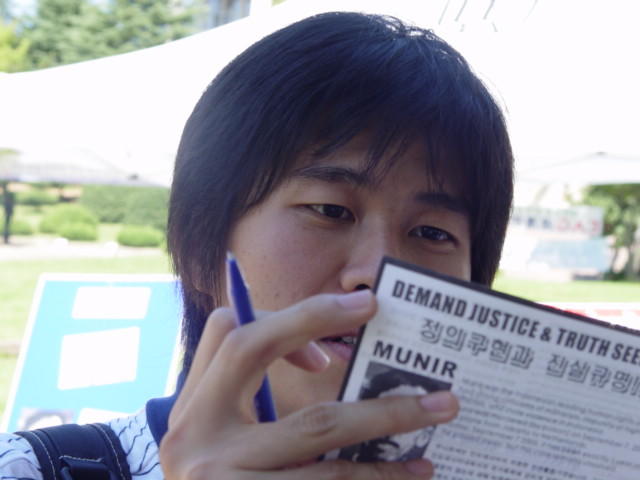
We arrived there at about 09.00 AM. It is good that the weather that day was conducive for us to conduct the activity (there was an typhoon forecasted in the news). The wind has dropped down the exhibited boards several times but it did not disturb us so much. We did it at the across of the Student Center building. Many students walked around that area and passed our stand too. Some of us dispersed one by one in some spots around the area and spread the cards/leaflets and approached the people to sign. While the rest stayed in the desk to serve and wait on people who passed around. We kept explaining and informing the case directly to the people there.

We also played the documentary films about Indonesia’s human rights issue/situation. We got more than half of all cards signed in this location. We left for Down Town at about 01.30 PM.

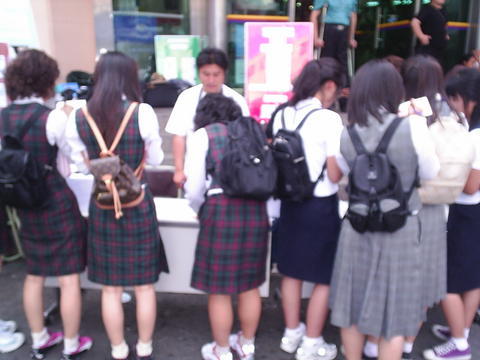
In Chonnam University, since it is a campus, the audience were mostly students, only few were lecturers. While in Down Town area, the audience is more varied. There are traders, workers, students, youths, monks, children, mothers, and other common people in it.

It means that we have targeted various kinds of people who were representatives of the Korean public. Therefore, it is justifiable to claim that we got the sympathy and support of the Korean public.


At Down Town

We arrived there at about 02.00 PM. We did it in front of the Post Office. It was on a crossroads where people passed by. Like in Chonnam University, some of us dispersed to different spots around the area; spread the cards/leaflets and approached the people to sign.


While the rest stayed in the desk (Sang Seon Kim, Jaedae Ko, Cheung Park) to inform and explain the campaigns in detail (obviously the interns can’t communicate in Korean !). The audience there was more varied. The people usually got attracted to the displayed pictures of violence (some were comparing it even to the scenes of the May 18 Gwangju Democratic Uprising).


Some children look surprised ( I hope not shocked of the display of explicit and gory pictures). They showed their curiosity by asking many questions and giving comments ( So Agnes tried her best to talk to them in English, while they asked in Korean – hmmm wonder of dialogue) . So we explained the matter we were campaigning. We left that place at about 05.30 PM.


4. Result

1. Some photo/journalists came and covered the activity (newspaper – The Namdo Ilbo- at page 2 ! and two online news – www.kjdaily.com and www.moodeungilbo.co.kr wow !).
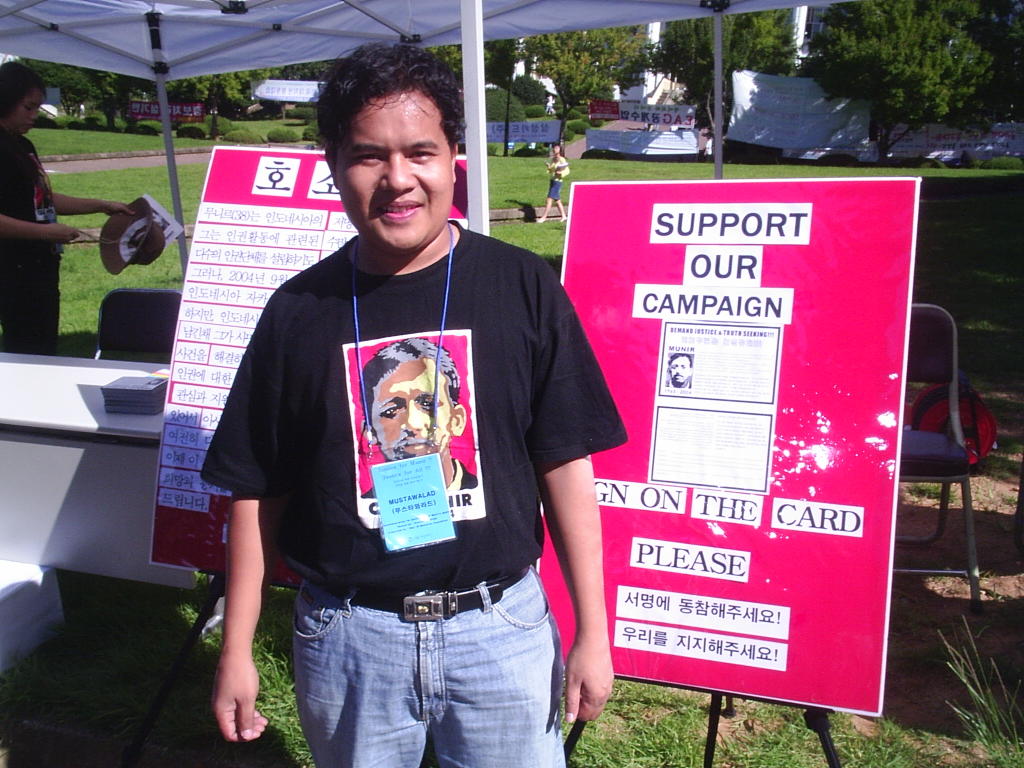
2. Of the 1000 cards we distributed, 800 were signed and 120 unreturned, only 80 were left empty.

We can conclude that this activity was successful in meeting its goals and objectives. We have concrete evidences as basis for this claim (hurrayyyyy !).


5. Lessons

It is very good to interact directly with Korean public and let them know about Munir case.

We have opportunity to be in touch with various kinds of Korean people (across age, gender, profession, etc. – I believe there were several foreigners as well )

The interns had a good opportunity to show cooperation by doing concrete international solidarity action for this very significant event.

We received full support from May 18 Memorial Foundation.

I personally felt I was not able to fully maximize the opportunity and explain to the public the case due to my lack of language facility.

As a first experiment of organizing and conducting this activity, this is a very good experience for me and for the interns as well.

I hope we can do such activities/ events in the future with better performance.


(Note: This is a syndicated report of Agnes Gurning of IKOHI, sorry I can't control my fingers to tap the keyboard and introduce my own commentaries- my apology, pete).


Support Amnesty International